


What is DogGo and how did it come about?
DogGo is a travel app for dog moms and dads that displays all the dog-friendly accommodations and attractions in a given destination.
I have always been an animal lover. I grew up with two Cavalier King Charles Spaniels, Lancelot and Billie. Fast forward to today, and I'm the proud dog mom to a cocker spaniel mix, Benny, and my third Cavalier, Simon. When I was a kid, we were lucky to have kind neighbors who would come over and take care of the dogs while we were on vacation. Things are a little different now...
As much as I love my dogs, traveling with two can get complicated, and making arrangements for them when I go out of town is even more so: boarding is expensive, and I am new to my city, which makes finding trustworthy pet-sitters difficult. Due to these constraints, they tag along with me on trips. Earlier this year, I planned a road trip from Nashville, Tennessee to Atlanta, Georgia with Benny. I had never been to Atlanta before, so I feverishly Googled any dog-friendly attractions. I knew there had to be a better way to plan this trip. This was the initial inspiration for DoGo!
Background & research question
“Before the COVID-19 pandemic, 40 percent of pet owners took their dogs with them when they traveled. That’s up from 19 percent a decade ago” (Kivat, 2019).
This influx in pet ownership, our curiosity toward pets joining vacations and the lack of resources for planning a trip with a pet led us to our primary research question:
What services and features should be included in a mobile application that aims to improve travel planning (by car and plane) for dog owners?

Problem statement
Dog owners need a way to easily identify pet-friendly accommodations while planning a trip. Since resources on this topic are limited, and there is a demand for dog-inclusive accommodations, both pet owners and accommodating business owners are losing potential value (Samchisen, et al 2022).
Personas & fursonas
-
![Ramona persona]()
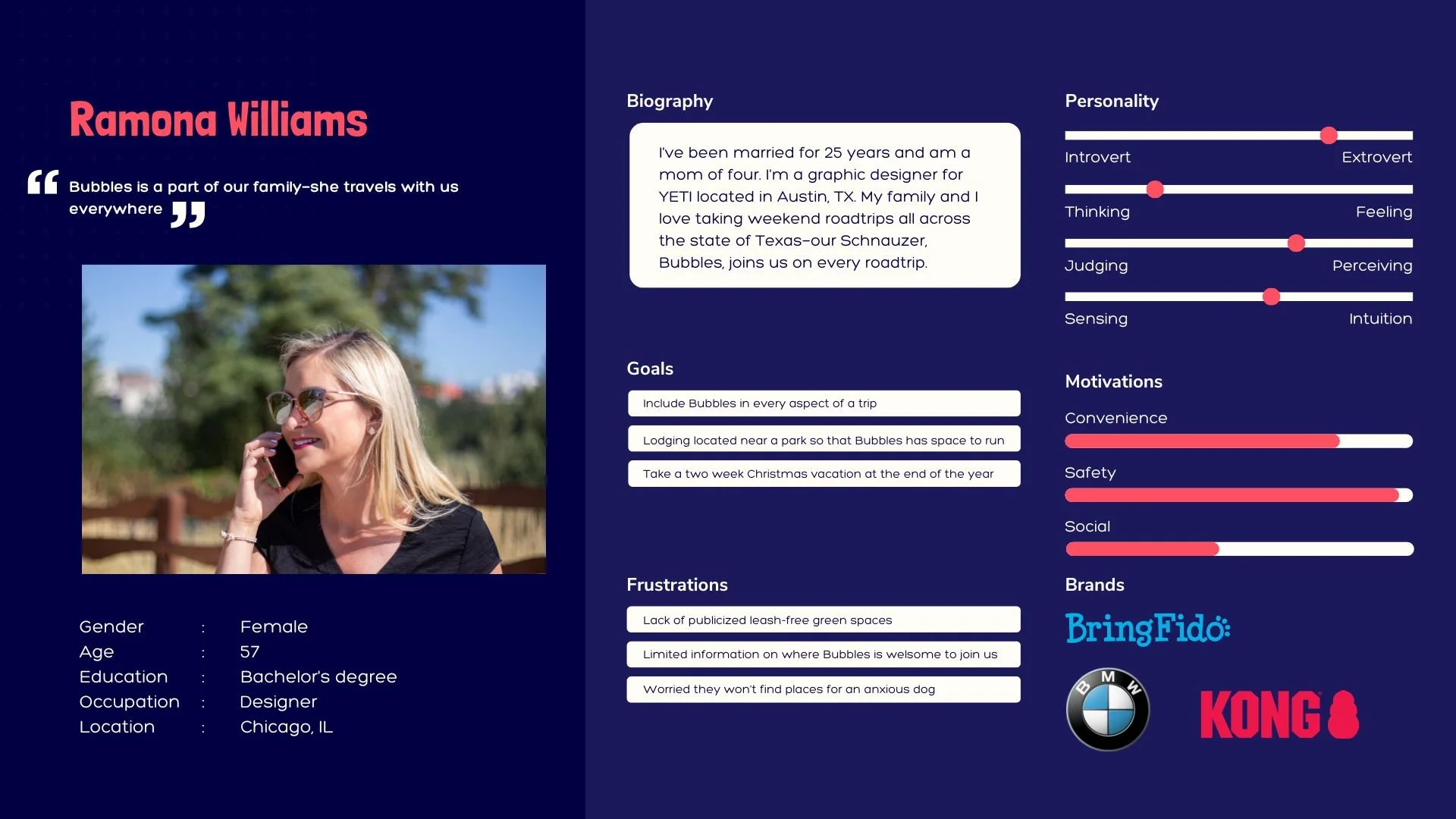
Ramona
The middle-aged designer from Austin, TX who loves bringing her dog on weekend road trip.
-
![Christian persona]()
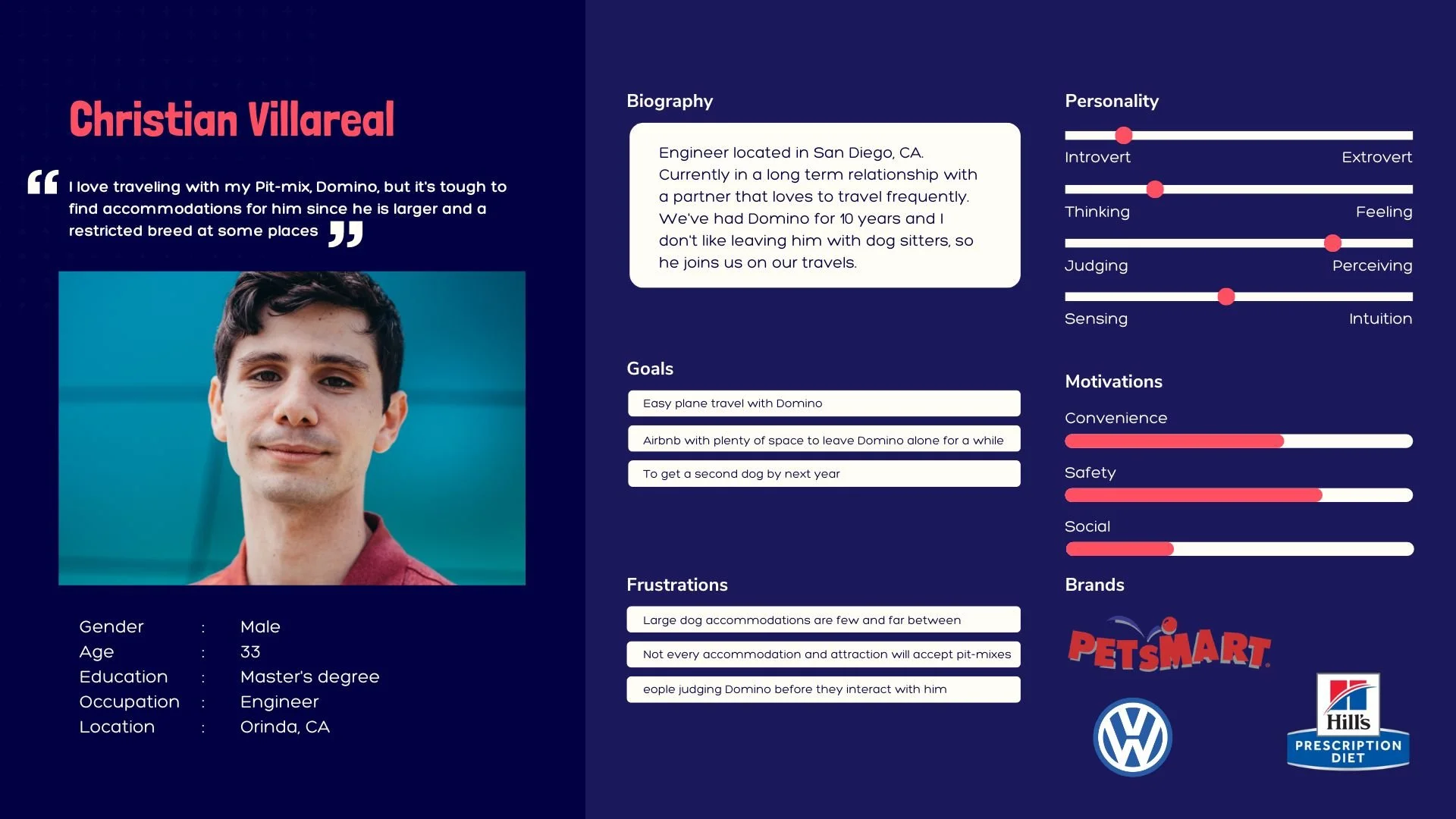
Christian
The 30-something year old man that is in a long-term relationship and travels heavily with his dog via airplane.
-
![Maya persona]()
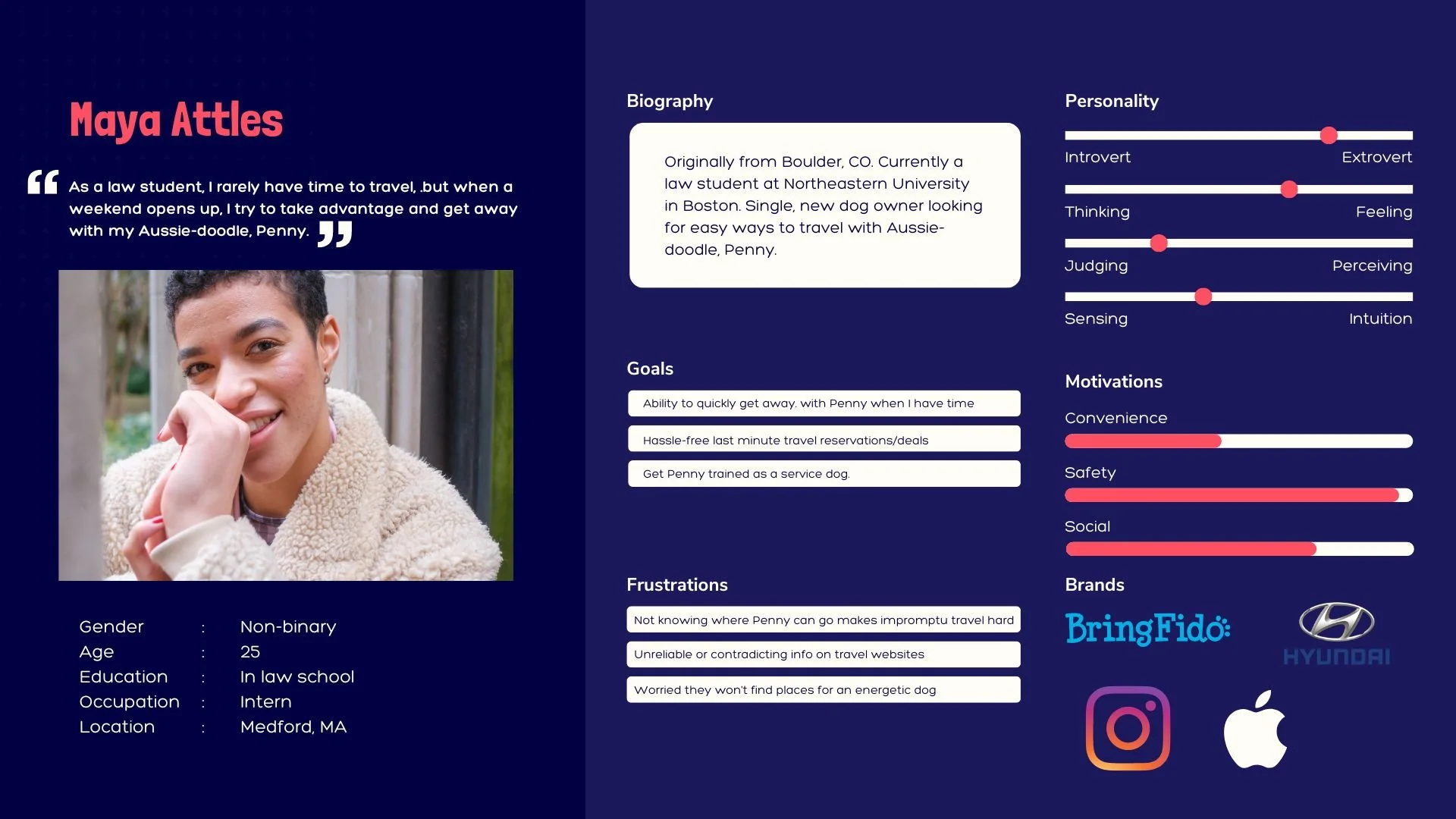
Maya
The single, 20-something, non-binary person who doesn’t travel often but when she does it is very spontaneous and with her newly adopted dog.
-
![Pringle fursona]()
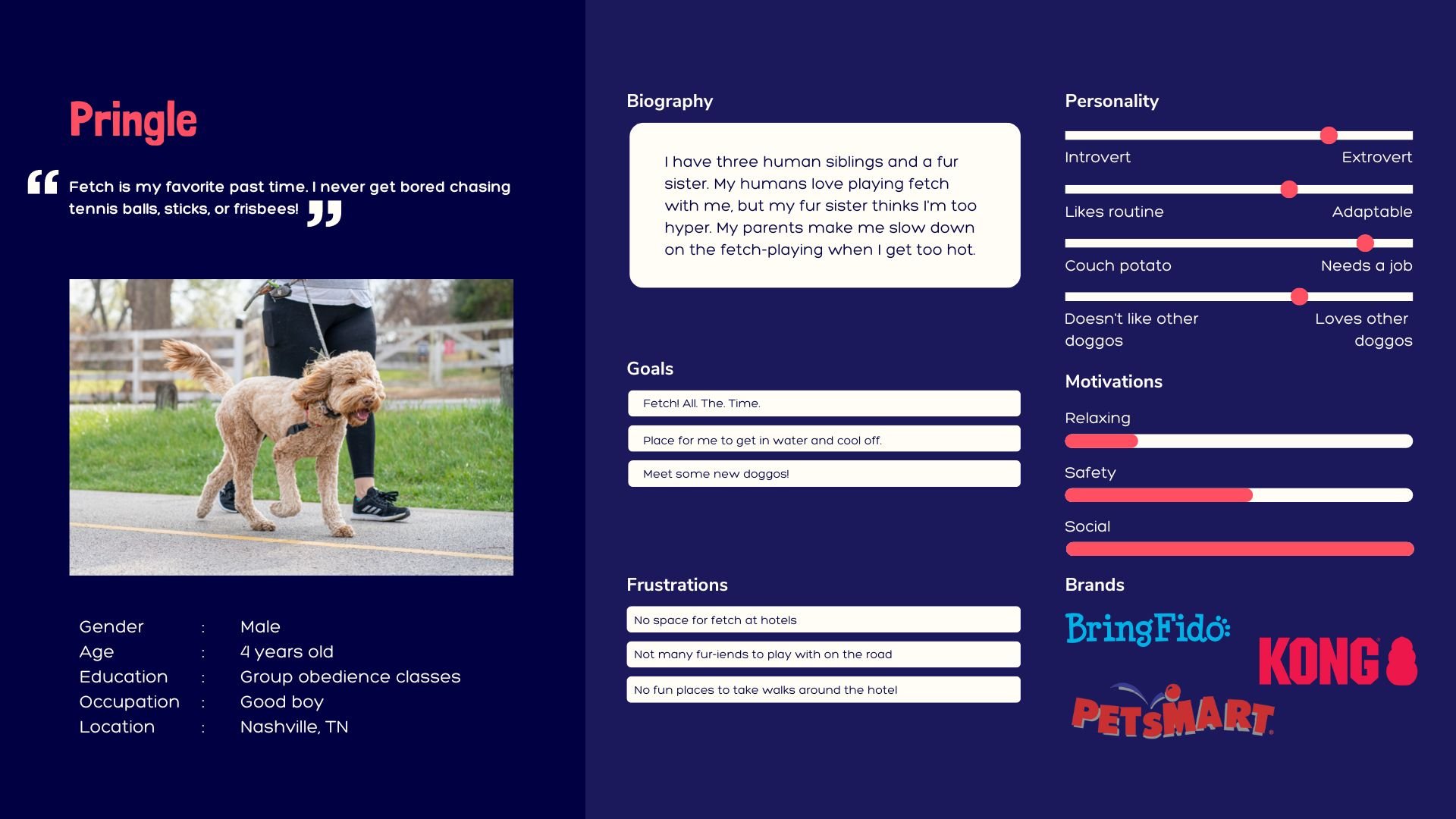
Pringle
Pringle identifies as a medium sized dog who loves being outside with his large family.
-
![Margaret fursona]()
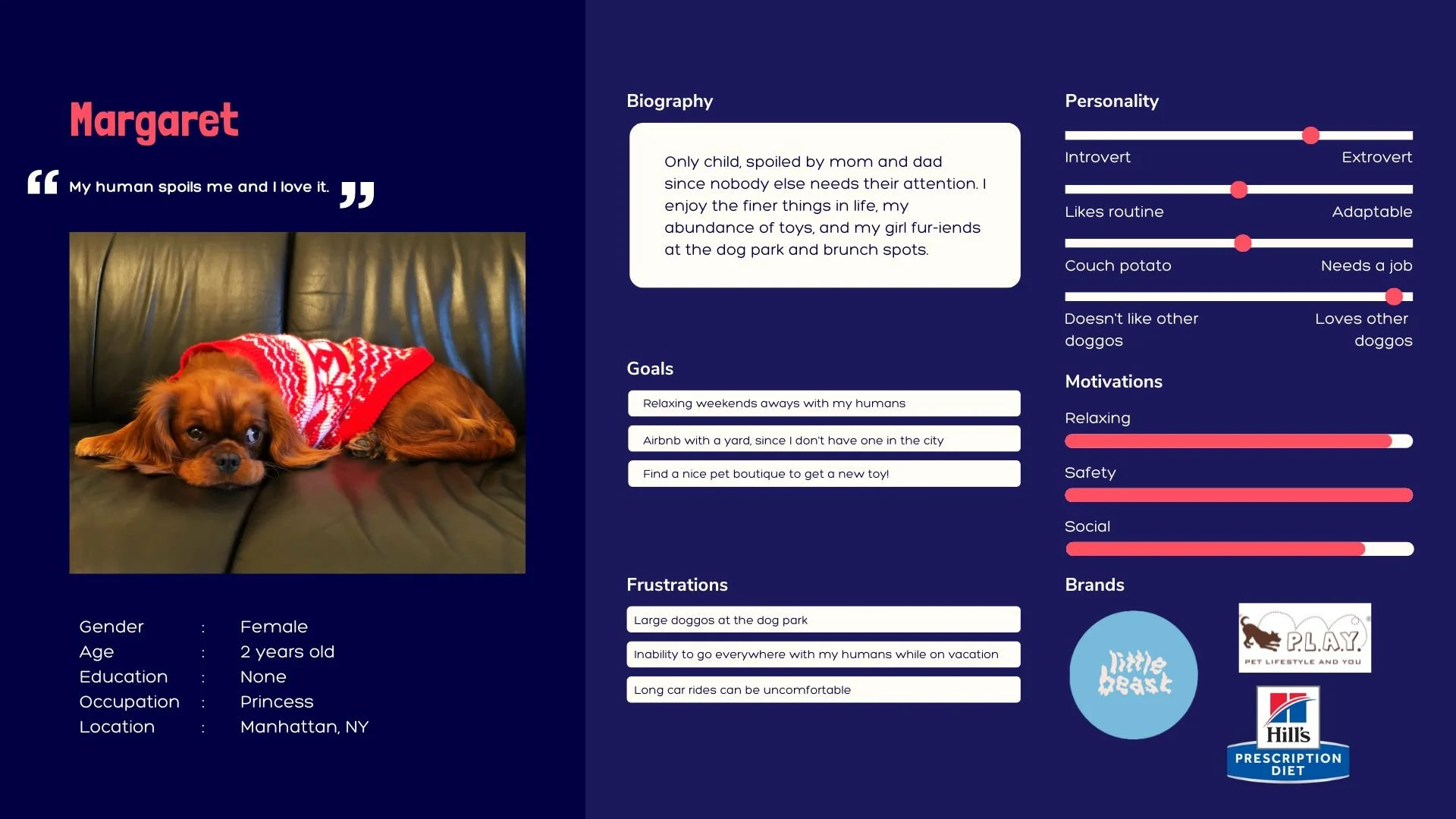
Margaret
Margaret identifies a small dog who enjoys being pampered by her parents when they travel.
-
![Sampson fursona]()
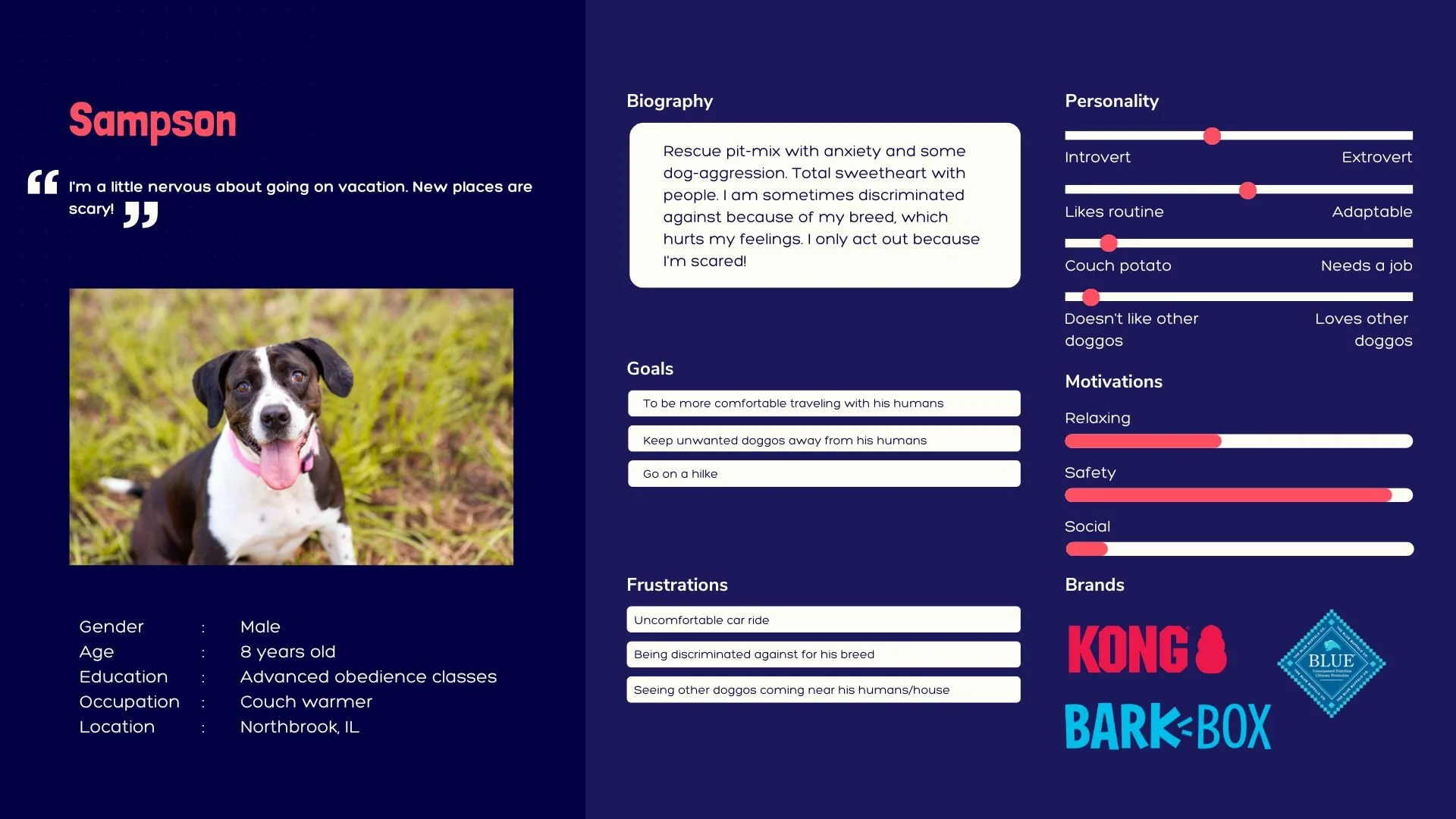
Sampson
Sampson identifies a restricted breed dog who enjoys running outside and protecting his family.
Research methodologies
Observations
To gain a real-world feel for how current dog owners would go through their travel planning, all our team members conducted travel plans with dog owners. Some observations were conducted in person, but the majority of observations were conducted over Zoom.
Survey
A survey of 15 questions was created using Google Forms. The survey included multiple choice, free text sections , and questions that provided a rating scale for participants to answer. The survey was online for roughly ten days and generated 136 responses.
Interviews
Each team member interviewed 2 current or former dog owners about their unique experiences when it comes to planning travel with their four legged family member.
Research findings
-
Contextual inquiries were conducted with ten participants via Zoom and in person. Each participant was read one of two scripts: one for travel by plane and another for travel by car. For ethical reasons, each participant was also asked if it would be okay to record the session and take pictures, to which they all agreed.
First Scenario: A flight to Austin, TX from your home, with five days spent in Austin, and then a return flight. I observed how the participant went through the process of booking a flight, while also account for the following activities during their stay:
● A visit to a lake
● A meal at a restaurant
● A trip to a tourist attraction (for example, a museum)
● An available veterinarian / pet clinic in case of emergency
● A dog park
Second Scenario: A road trip from Nashville, TN to Miami, FL with one overnight stay planned on the way down, 5 days spent in Miami, and one overnight stay planned on the way back. I also observed how the participant went through the process of accounting for the following, including car rental (if needed):
● A visit to the beach
● A meal at a restaurant
● A trip to a tourist attraction (for example, a museum)
● An available veterinarian / pet clinic in case of emergency
● A dog park
Generalizations
Despite the method of travel, both groups experienced similar ways of searching for dog-friendly places and expressed similar pain points, such as frustration locating information about pet accommodations and lack of space at some destinations. Overall, participants relied 14 heavily on reading reviews and ratings to plan out their trip. There was a growing frustration for flight scenario participants, in particular, regarding the difficulty of booking a plane ticket due to breed and size restrictions. AirBnB was the preferred method for overnight stay since it allowed dog owners to book a place with plenty of roaming space plus the opportunity to book one with a fenced back yard and indoor air conditioning. This provided some ease for dog owners who may not want to take their dog everywhere with them throughout the trip. Lastly, despite socio-economic background, all participants were disappointed with the extra fees accrued for having a dog (mostly for overnight stay and car rentals).
Trends
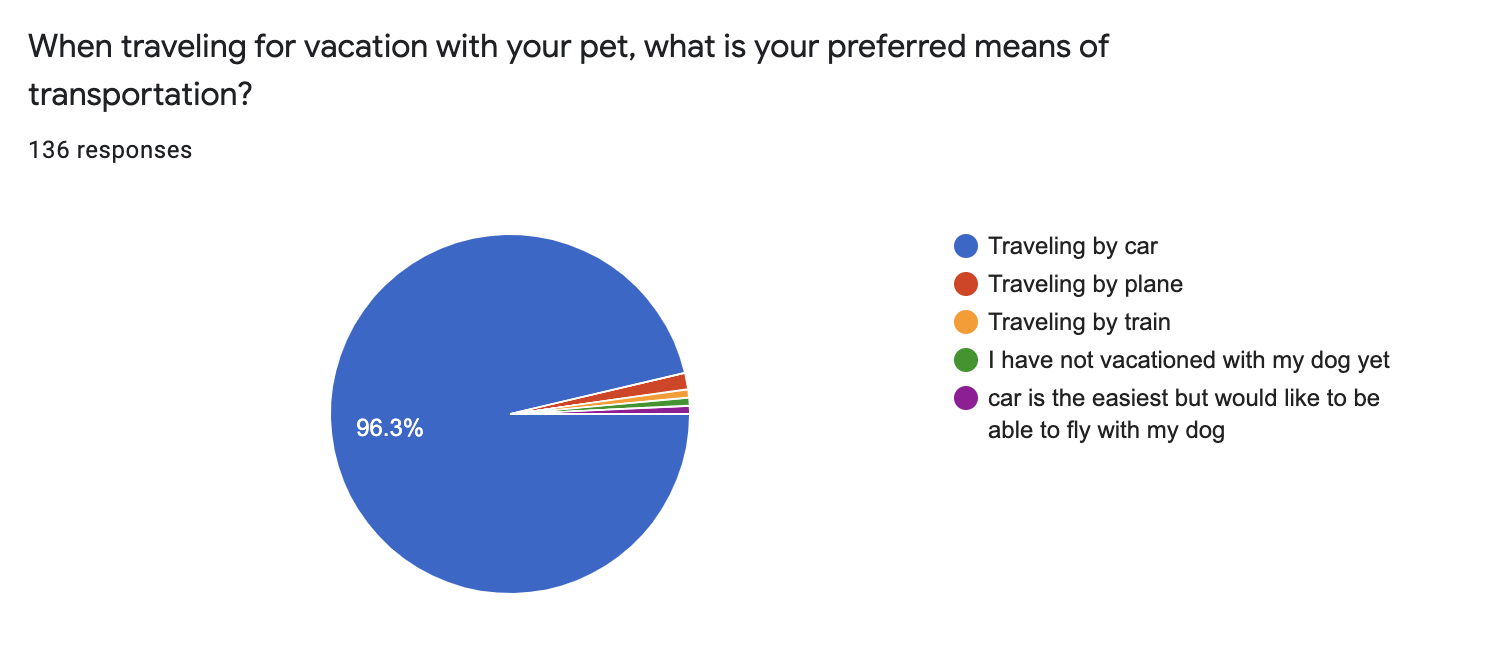
Google search was the preferred method of starting the process for dog-friendly attractions while AirBnB was the preferred method of starting the process for dog-friendly accommodations. Dog owners preferred renting houses over hotel rooms and displayed emotional care for their pets. Lastly, dog owners prefer car travel over plane travel due to anxiety, size restrictions, and breed restrictions.
Surprises
Many websites and companies make it difficult to easily find information about their dog policy. It took most participants some searching around until they finally found anything regarding dog-friendliness. Many dog-friendly companies also charge an extra fee for having pets. In one observation, the owner was concerned about breed restrictions for her pit bull—but that thought only came to her after going through all the effort of choosing locations to visit, and that she had to specifically search about breed restrictions because it 15 wasn't as though that information would be specifically advertised everywhere else. Breed and size restrictions also played a role in determining which airline to fly.
Takeaways
There is a large need for an app that takes into consideration the need of all types of breeds and sizes, whether traveling by car or plane. Allowing dog owners to rate and comment should remain a priority as dog owners seek those within their community for validity of these places. Any sort of fees should be made clear. A similar exercise but with bringfido.com could be beneficial in seeing what aspects of the website removes barriers and what limitations the website still has for dog owners (Samchisen, 2022).
-
A total of 10 interviews were conducted to gain an understanding of user preferences and needs. Themes derived from our contextual inquiries were used to plan our interview protocol, which served as a way for us to consistently ask the same questions across our interviewee group. Notes from the interviews were collected and shared on Mural, and then synthesized to determine resulting themes.
Key theme #1: Dog owners want to travel with their pets
Dog owners of all professions, ages, and geographic locations share a desire to travel with their pets. Many interviewees expressed an emotional bond with their pet that influenced their traveling needs. One interviewee (senior woman, divorced, suburban homeowner, new dog owner) expressed, “It's like having a child. I treat the dog like my own kids...the only difference is the dog is dependent on me for the rest of its life!" Another interviewee (middle aged woman, 16 married, suburban homeowner, former dog owner that traveled with their dog often) described the impact the dog had on her traveling plans because of this emotional connection: “He was our family so he'd go wherever. If he could go, we took him. If we couldn't then we'd make other arrangements. He was part of our family and we loved every second.”
Key theme #2: Preferred tools—which include Google and AirBnB—don't provide sufficient information to pet owners
Despite the notion that younger people are more tech-savvy, the same tools were repeatedly mentioned when planning a trip: Google and AirBnB. However, this led to a frustration of having to scour the internet with planned keyword searches to guarantee that an accommodation was truly pet-friendly, with a high level of reliance on user reviews. “A consolidated tool would be so helpful!” exclaimed a female millennial, married, tech-savvy dog-owner from Nashville, TN. In talking about her ideal vacation, this same interviewee described a need for an app that displays all results laid out in one place like Google Maps with an emphasis on visuals. Another interviewee—female baby boomer, retired, homeowner, married, lives in N. Florida—uses AirBnb for booking overnight accommodations because you can filter for pet-friendly properties and they seem to be accurate. The visuals helped many of the interviewees to search for larger properties that would allow their dogs to roam around. Lastly, although bringfido.com was mentioned throughout contextual inquiries, most interviewees had never used it, heard of it, or relied on it. One female interviewee said about the service, “I didn't really get a lot of answers [from bringfido]...it wasn't very clear if [dog-friendly destinations] were year-round, or just outdoor dining.” The need for a consolidated tool with visuals and the ability to plan a trip from car rental to overnight stay to daily activities confirmed [my] problem statement.
Key theme #3: Plane travel is almost never an option
The idea of traveling with their dogs in a plane caused an anxious opposition. While dog owners want to travel with their pets, there was a high level of concern around the dogs' well-being at an airport and within the plane. Would they be in cargo or beside them? One respondent expressed that her german shepherd simply wouldn’t be allowed in the cabin because of his size since the airlines she is aware of have size restrictions. Furthermore, different airlines have different limitations and rules which makes it difficult for dog owners to make an informed decision on which airline to choose.
Key theme #4: Dog-friendly and pet-friendly are used interchangeably When asked about the difference between “dog-friendly” and “pet-friendly”, dog owners seemed to have a couple different answers. Overall, the majority seemed to agree that, “Dog-friendly means that they allow dogs while pet-friendly means that allow different domestic animals” as expressed by a 29-year old, female owner of a dalmatian from Chicago. This was interesting to hear because in some contextual inquiries, dog-friendly leaned more towards service animals but not necessarily dogs in general. Throughout interviews, the two words were used interchangeably by interviewees.
Key theme #5: Fees should be transparent
Lastly, traveling with a dog comes at an additional cost. Not only does it take more time, but many services such as hotels and car rental companies have hidden fees for having a dog. The fee (whether it be a one time or daily fee) may deter some plans and complicate the process of planning a vacation with a dog.
-
Throughout the observations, interviews, and surveys, I noticed several recurring themes: how different generations utilize Google in their travel planning, consideration of dogs’ comfort and safety, and preference for car travel over air travel.
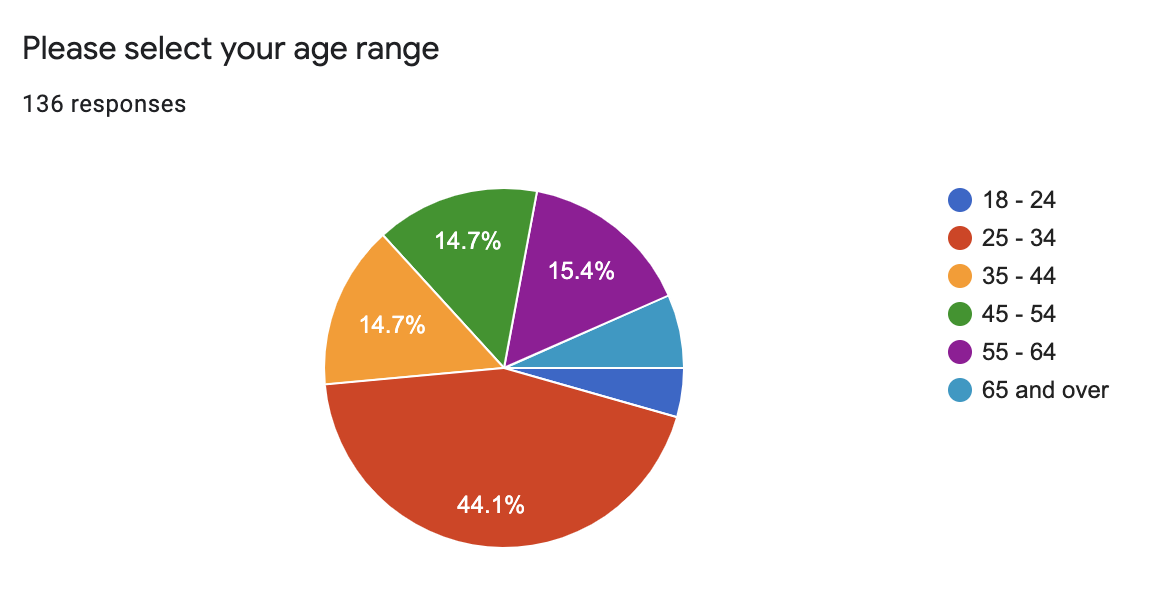
The first seven questions allowed us to get to know participants a little better, focusing mainly on demographics of both themselves and their dogs. 44% of respondents were ages 25-34 (Millennial), nearly 30% were between the ages of 35-54 (older Millennial, Gen X). Roughly 7% were aged 65 and older (Baby Boomer), and 4% were between 18-24 (Gen Z).
While an effort was made to share our survey link in more diverse digital communities (through social media, work communities, etc.), women were the vast majority of respondents. I can speculate as to why more women responded rather than men, I recognize this as a potential drawback to the ultimate research findings.
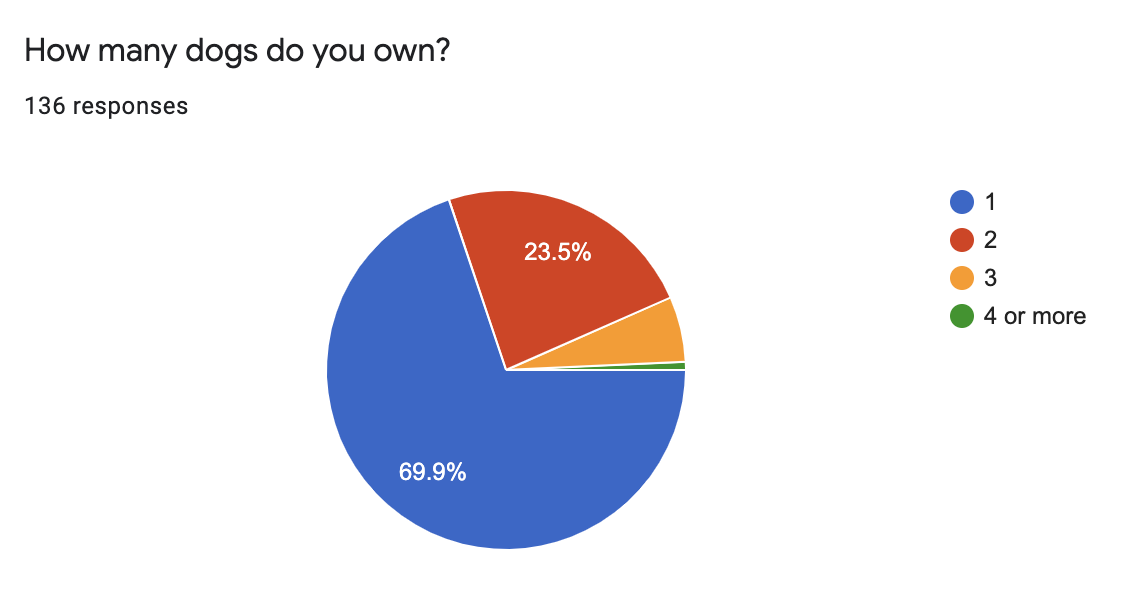
A large percentage (90%) of participants describe themselves as “experienced” dog owners, having only one dog (70%). When it comes to traveling with their dog, the majority of participants prefer to travel with other people, as well. As for the dogs, respondents own a wide variety of dog breeds, ranging from Chihuahuas to Mastiff mixes, purebreds to mutts.
Most respondents said they owned a large dog (50-70 lbs), followed by medium (30-49 lbs). One interesting thing to note was that only about 21% identified their dog as extra small (less than 20 lbs), which one would think would be the most prevalent sized dog when it comes to travel.
Select survey results




Suggestions
A dog's perspective
An experience centered around the perspective of the dog, rather than the human, can be a helpful point of differentiation, that also enables a useful sense of empathy for four-legged travelers.
Design for all humans
When coming up with designs, consider Web Content Accessibility Guidelines (WCAG), with a goal of adhering to AA web accessibility standards, AAA when at all possible.
Define "dog-friendly"
What does "dog-friendly" mean? Is a property that allows dogs really "dog-friendly" if they don't have space for dogs to walk or explore, or in a loud part of town?
Design work

Round 1
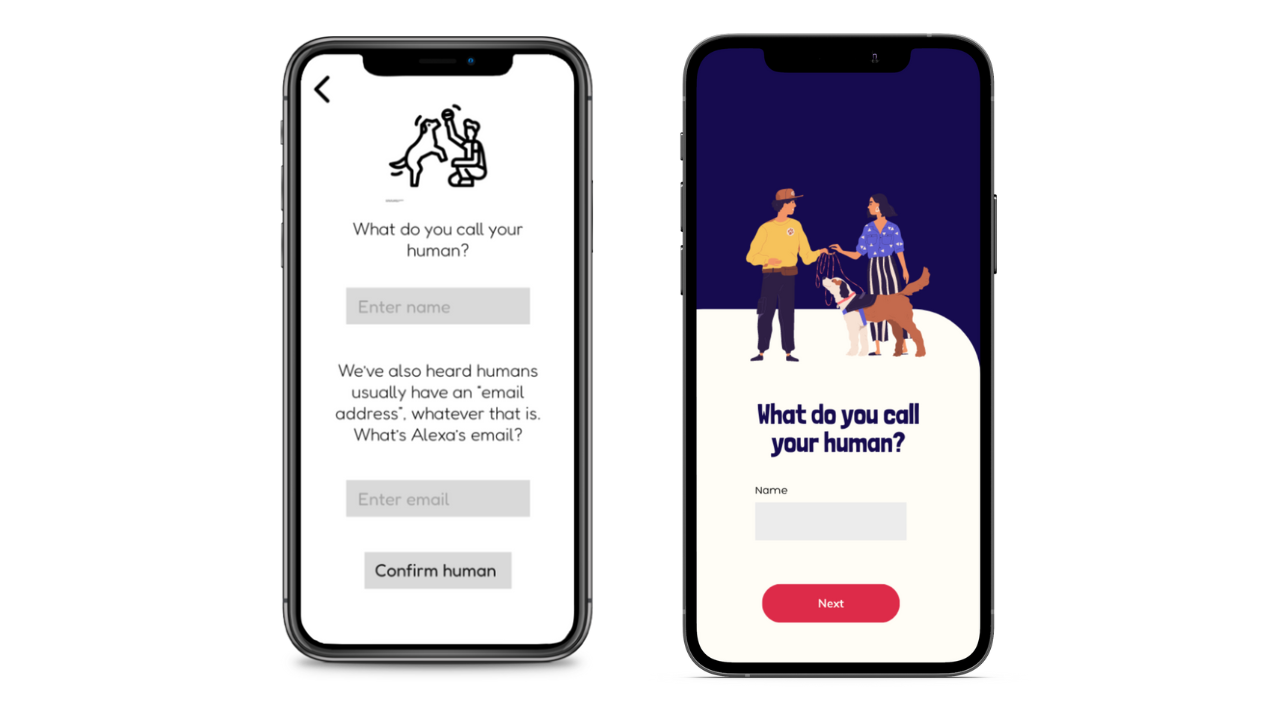
During IDS 405 User Research, I quickly mocked up a preliminary “brand” design, but I knew I could take it further.
My conversation with my mentor, Lauren Liss, a lecturer in the IDS program, further cemented that notion. After showing the first draft of branding to Lauren (left), she gave me several helpful suggestions regarding color application, layout, and functionality. I told her that my goal was to make DogGo feel inviting and friendly, just like a dog. She mentioned she liked the shade of reddish-orange I selected and the way the blues on the dog complimented the background.
When I brought up the idea of joy, yellow came to mind, but she advised against yellow, since yellow can be very complicated to work with, especially when it comes to accessibility.
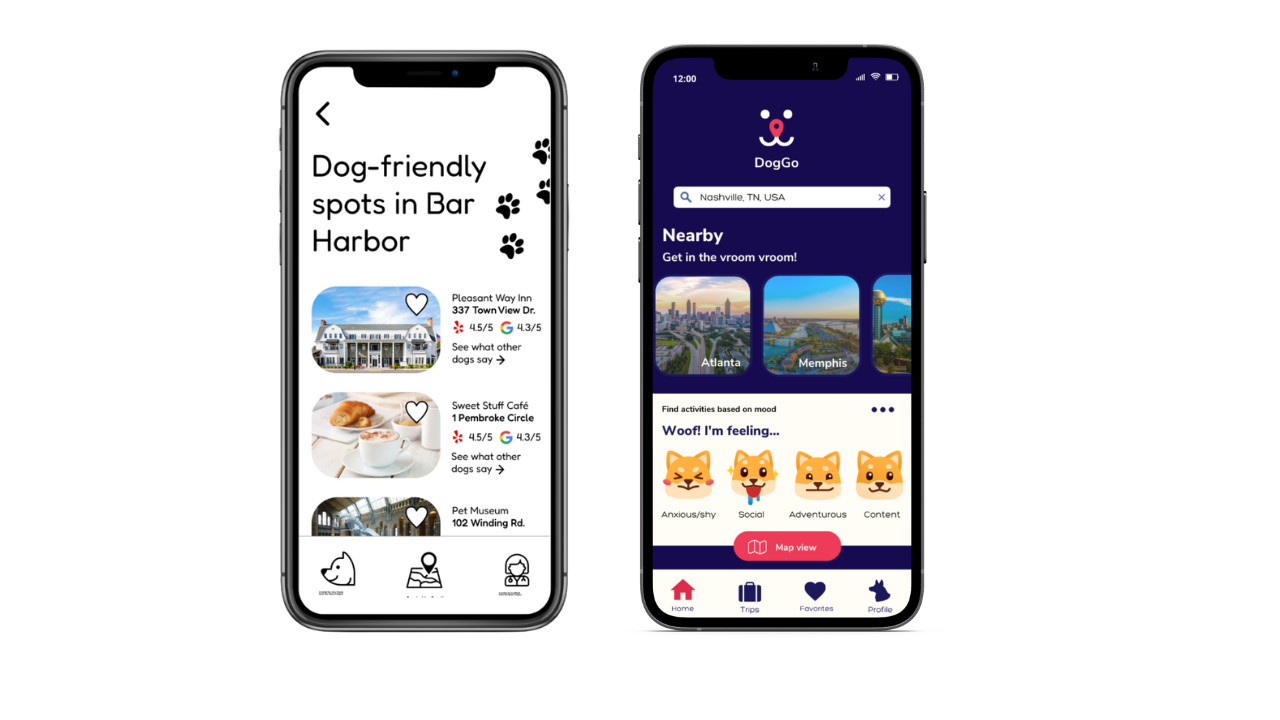
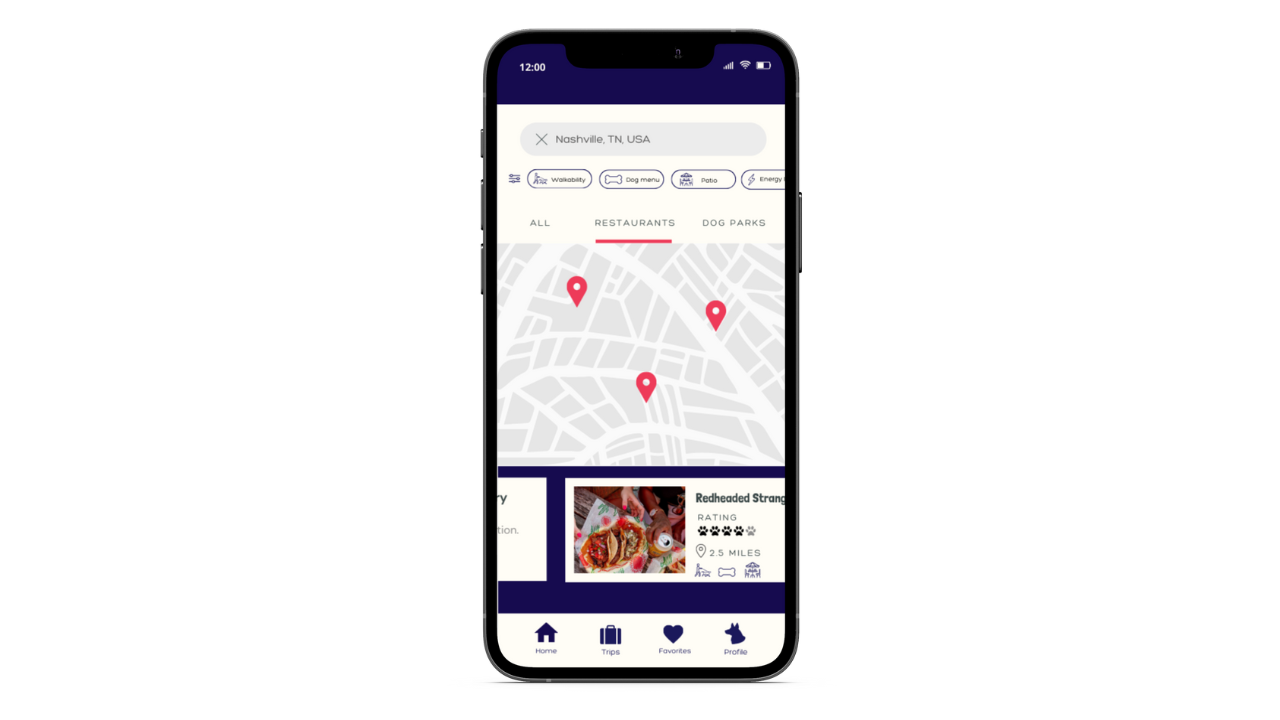
Lauren also had great insights regarding the usability and functionality of DogGo. For example, in my first round of mockups, she advised against using list results. Her reasoning being that lists are not always helpful to people when they are in new places; there is no orientation or visualization.
New DogGo UI
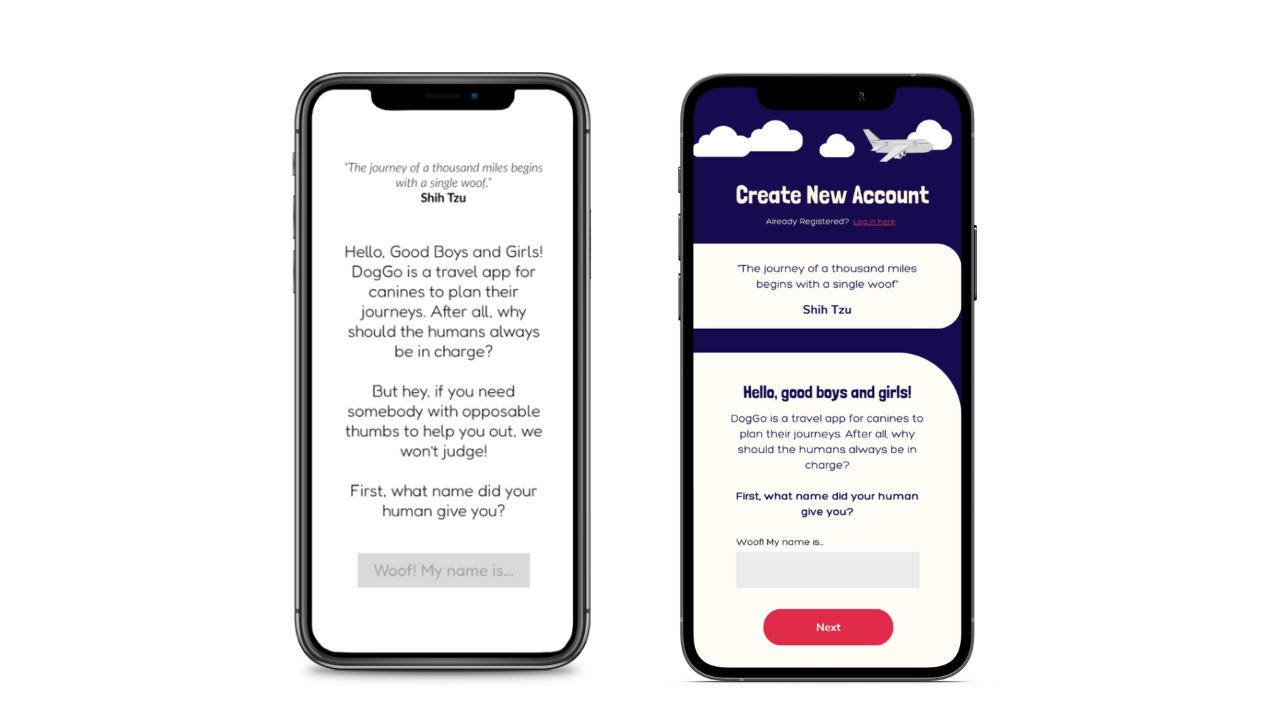
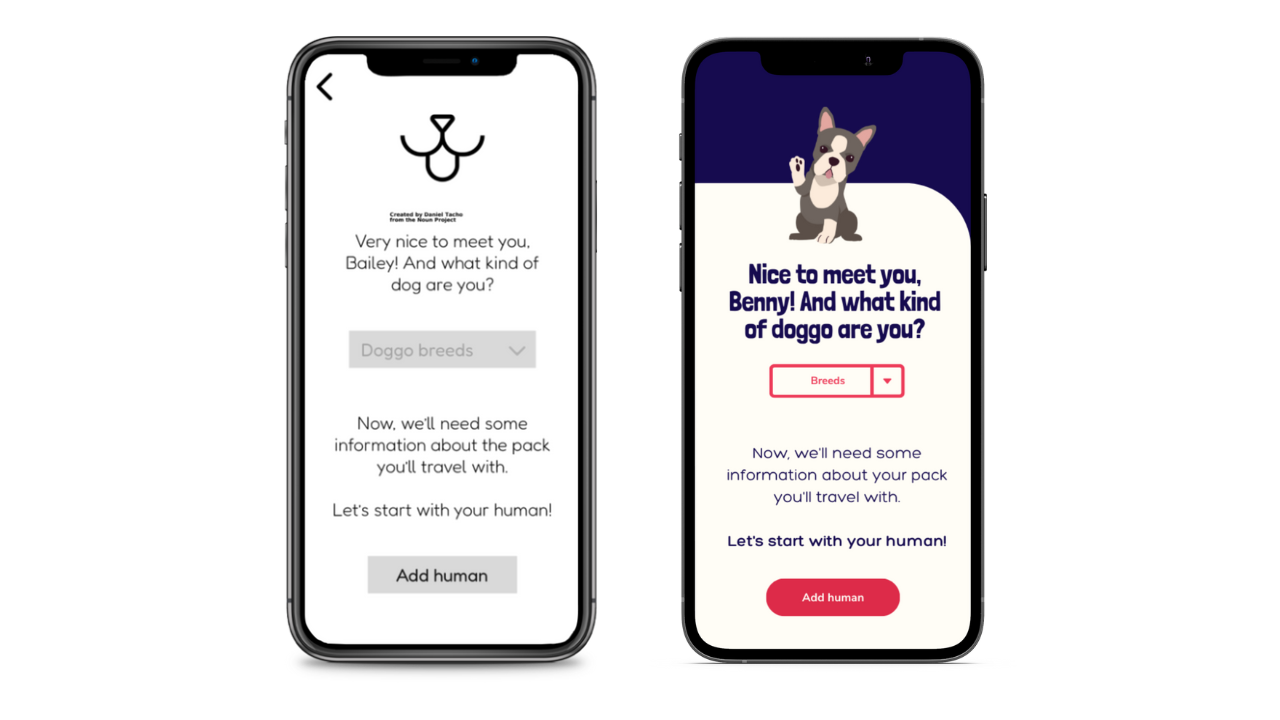
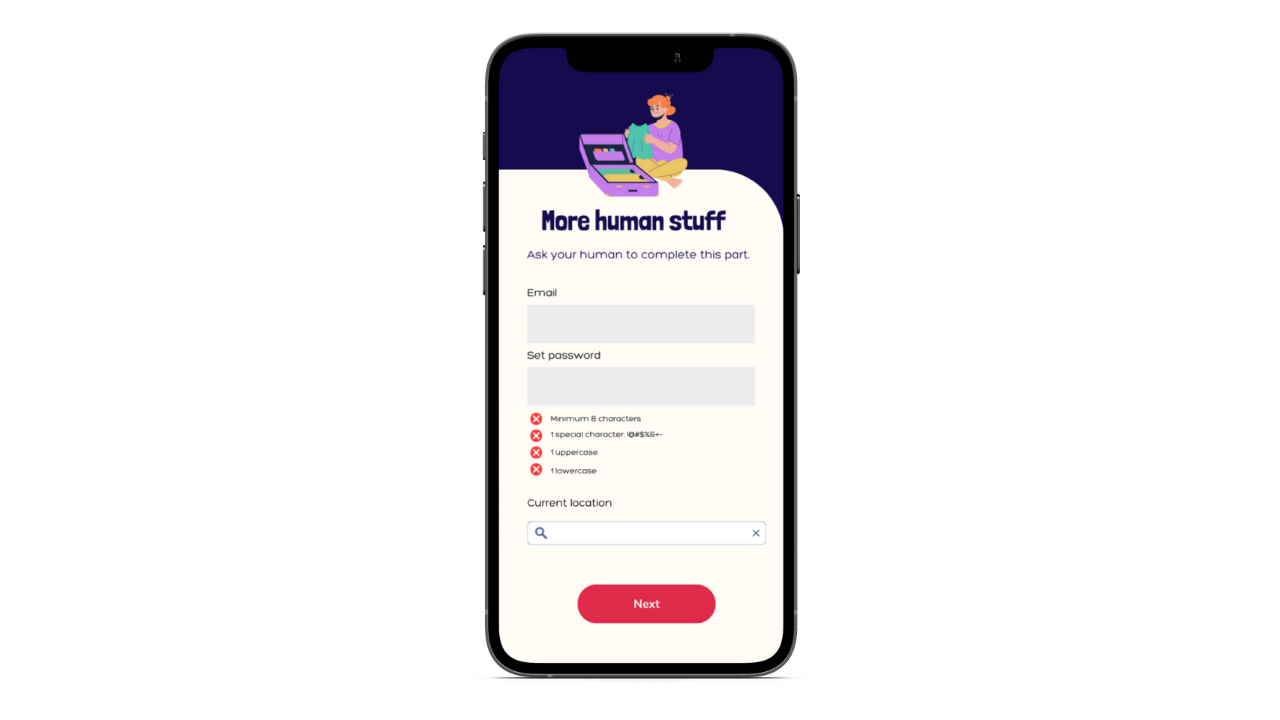
Lauren’s feedback pointed me in a completely new direction. After taking some time to reflect on her advice, I got to work on the new DogGo UI. Although I was not opposed to the dominant red color in the original designs, I did not test the other colors in the color palette for accessibility contrast. I ended up deciding on blue as the primary color, off-white as a secondary color, and reddish-pink as an accent color. I also updated the heading, subtitle, and body fonts to create a better visual flow . In previous design concepts, I did not have any logo designs, so as part of my new UI, I created a dark and light version of the new DogGo logo.
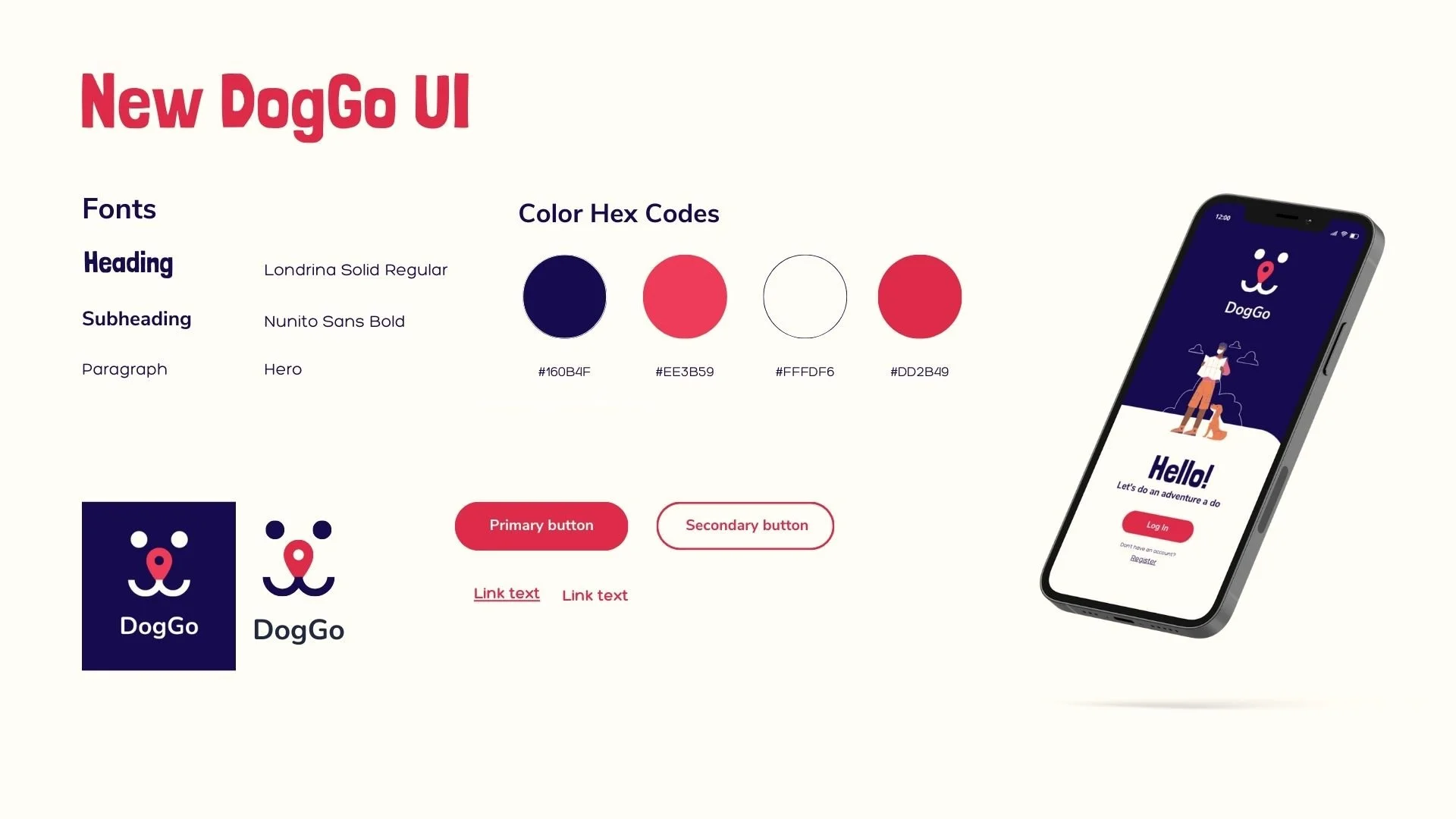
Once I decided on a basic color palette, I ran a color contrast check on the hex codes I selected. As shown in Figure 20, the color combinations and hex codes pass AA and AAA Web Content Accessibility Guidelines (WCAG). The only combinations that do not pass are ones that I did not use in the UI, and they only applied to small text in the AAA standard. I decided to include two different shades for the accent color to be more accessible, depending on the context and usage, i.e. button and text contrast.

Design evolution
-
![]()
Splash screen
-
![]()
Create new account prompt 1
-
![]()
Create new account prompt 2
-
![]()
Create new account prompt 3
-
![]()
Create new account prompt 4: Email and password creation
-
![]()
Login screen
-
![]()
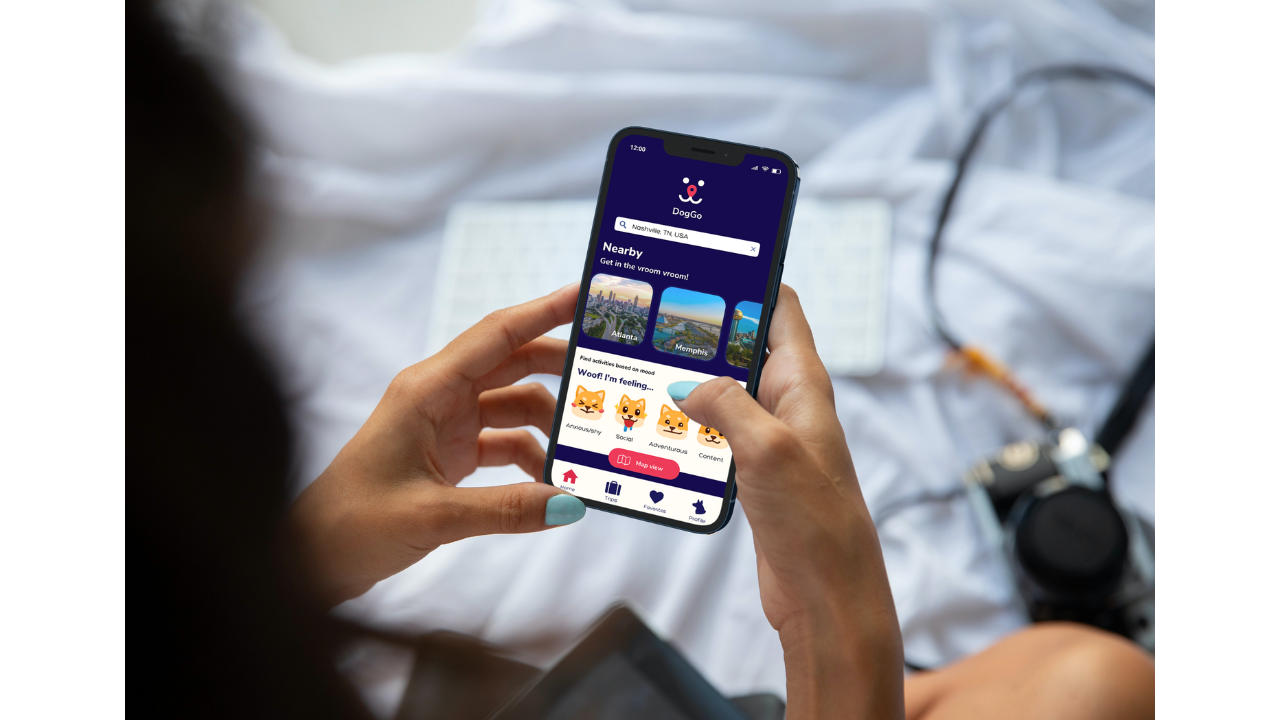
Home screen
-
![]()
Map view
-
![]()
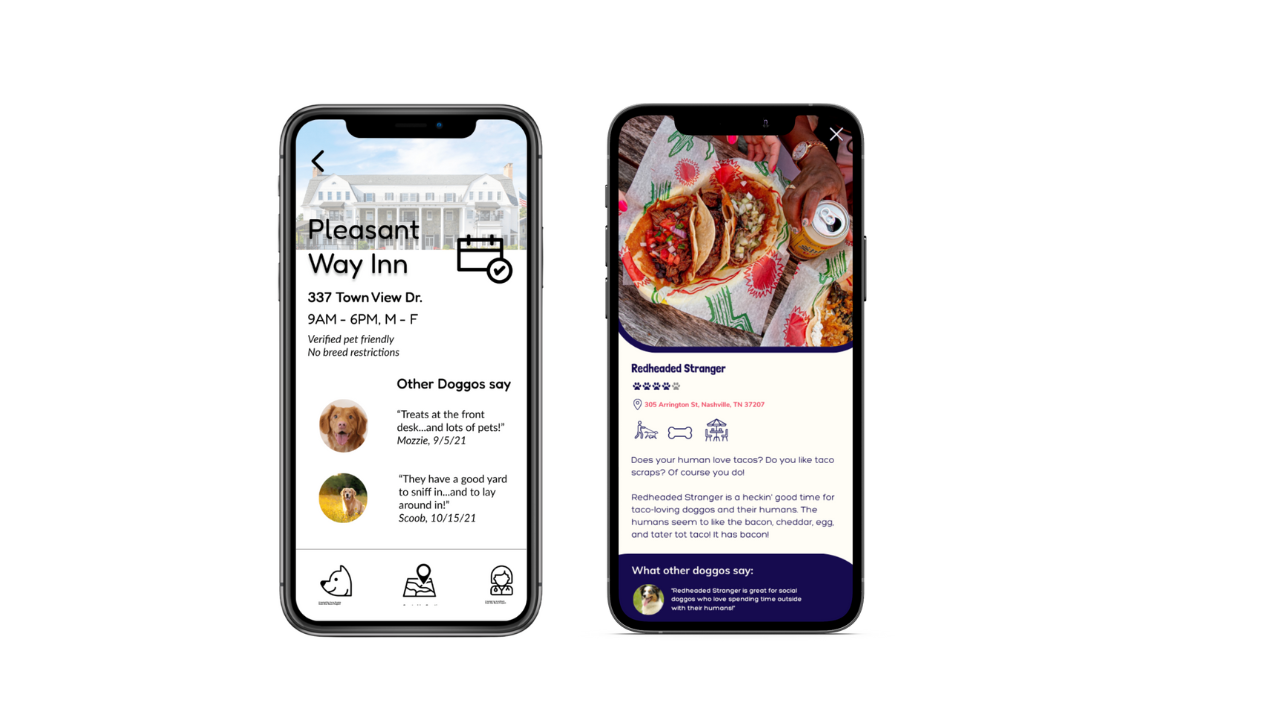
Location detail
-
![]()
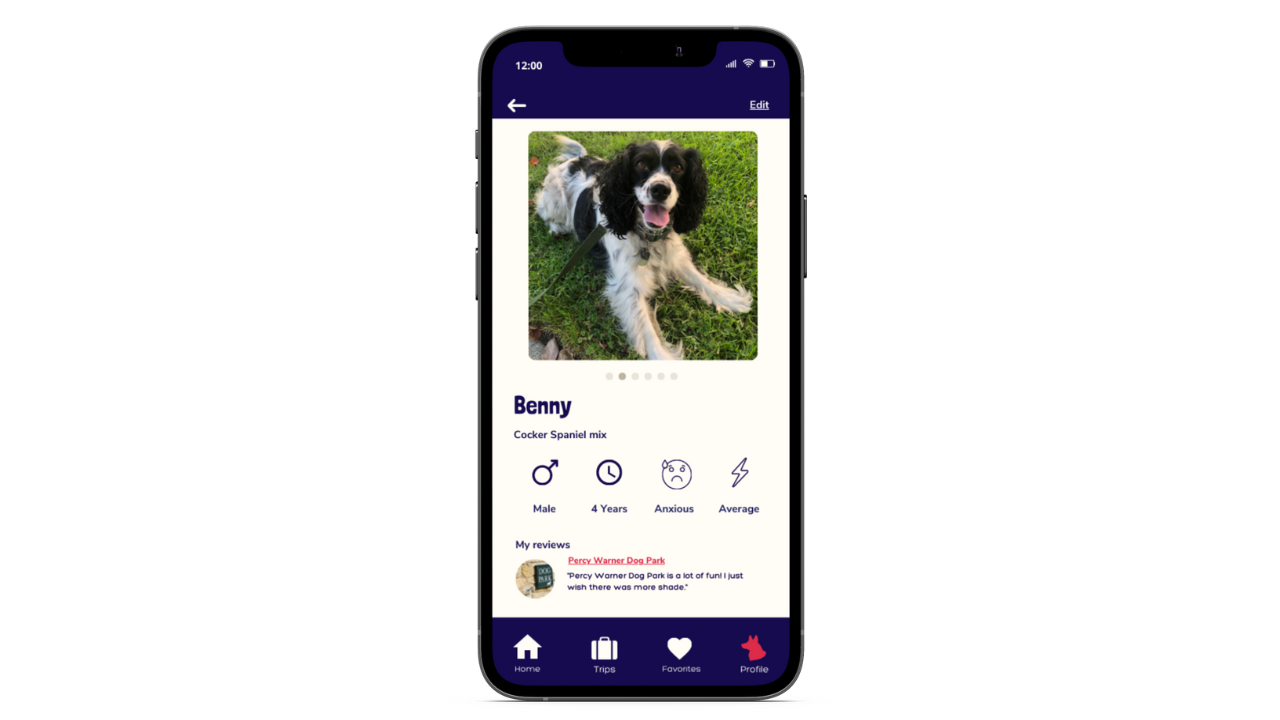
Pet profile



What I learned and what’s next
DogGo has given me the opportunity to work on a project from nose to tail (no pun intended). IDS has taught me that being a UX designer, or a data analyst, or a learning designer is not just about design, research, or analysis—it’s about using technology to help people. Given the important and special role dogs play in my life, I am so happy I was able to breathe life into an app that could not only be of use to me, but for other dog moms and dads, too.
My next step will be to design screens for additional components of DogGo, like favorites, account settings, and trips.